

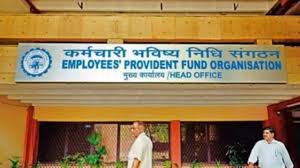
The Employees’ Provident Fund Organisation (EPFO) has long been a cornerstone of India’s retirement planning framework, offering salaried employees a structured, government-backed means of accumulating savings for post-retirement life. Amid the recent buzz surrounding the updated EPFO higher pension eligibility, employees have started exploring this avenue with curiosity. But why should someone consider opting for EPFO’s higher pension scheme? What does it mean for your long-term financial planning, and how does it compare with other financial instruments like a Public Provident Fund (PPF) account for minors? Let’s dig deeper into the nuances of EPFO’s higher pension and discuss its implications for your future.
Understanding EPFO Higher Pension: What Is It?
The EPFO higher pension scheme primarily revolves around enhancing the pension amounts for employees who meet certain eligibility criteria and wish to exercise their option to contribute a larger portion of their salary to the Employees’ Pension Scheme (EPS).
Under the EPS framework, pension was traditionally calculated using a wage cap, i.e., salary amounts were limited to ₹15,000 per month for pension computation purposes. However, the higher pension rule allows employees to opt for a pension calculated on their “actual salary,” instead of this pre-defined capped amount.
Calculations: Standard vs Higher Pension
Let’s use an illustrative example to understand the difference between standard and higher pension calculations.
Standard Pension:
If your monthly basic salary is ₹30,000 but falls under the capped ₹15,000 calculation, the formula for pension deduction and retirement payout looks like this:
– Monthly Contribution to Pension Fund:
8.33% of ₹15,000 = ₹1,249.5
Employee and employer jointly contribute this amount to the EPS account monthly.
– Monthly Pension (Post-Retirement):
Pension = (Pensionable Salary × Pensionable Service) ÷ 70
Pensionable Salary = ₹15,000 (the capped salary)
Pensionable Service = let’s assume 30 years
Monthly Pension = (₹15,000 × 30) ÷ 70 = ₹6,429 approx.
Higher Pension:
If you opt for EPFO higher pension, your real salary of ₹30,000 becomes the basis for pension computation. Here’s how the revised amounts stack up:
– Monthly Contribution to Pension Fund:
8.33% of ₹30,000 = ₹2,499
This results in higher deductions and contributions to EPS.
– Monthly Pension (Post-Retirement):
Pensionable Salary = ₹30,000 (real salary)
Pensionable Service = 30 years
Monthly Pension = (₹30,000 × 30) ÷ 70 = ₹12,857 approx.
By contributing more upfront from your pre-retirement income, you can secure a substantially larger monthly pension in retirement, giving you improved financial security.
Benefits of Opting for EPFO Higher Pension
1. Enhanced Post-Retirement Income
As demonstrated above, EPFO’s higher pension scheme offers significantly higher payouts once an employee retires. If your lifestyle in retirement involves larger expenses or a diversified financial plan, this enhanced pension amount can provide a reliable income stream.
2. Government-Backed Stability
EPFO operates under firm regulatory guidelines and government oversight. Compared to other investment vehicles, EPS contributions and payouts tend to have lower risk associated with defaults or loss of principal due to economic changes.
3. Ideal for Long-Term Financial Planning
By dedicating a larger portion of current earnings to EPS contributions today, employees can leverage India’s growing economic framework for better payouts tomorrow.
4. Employer Contributions Stay Consistent
Even for EPFO higher pension, the employer’s contributions align with the increased salary basis. This ensures that the financial burden isn’t solely on individual employees—it’s shared with their employers.
Considerations: Factors That Could Impact Decision-Making
While EPFO higher pension has its merits, employees need to thoroughly evaluate its implications before opting for it.
1. Reduced Flexibility with Current Income
Contributing more to EPS directly reduces your take-home salary. Employees should analyze whether they can bear this reduction comfortably, especially those managing immediate familial responsibilities.
2. Impact on Other Investments
Higher EPS contributions could affect your ability to invest in alternative market instruments, such as mutual funds, stocks, or even maintaining a PPF account for minors. For example:
– PPF Account for Minors:
PPF can be an excellent long-term savings instrument, especially if opened for minors under your guardianship. Imagine contributing ₹1,50,000 annually to a minor’s PPF account at an assumed interest rate of 7.1%, compounding annually for 15 years. This account could grow to over ₹40,00,000 by maturity.
Higher EPS contributions may compel employees to scale down their PPF investments, which could limit wealth generation potential for dependents.
3. Administrative Work
Opting for EPFO higher pension involves legal compliance and paperwork. Employees may need to request past employer records, salary slips, or additional certifications.
4. Uncertainty in Future Amendments
While government-backed schemes are usually stable, amendments to pension formulae or future revisions could affect projections. Employees need to seek clarity on how such scenarios might emerge over time.
How EPFO Higher Pension Compares to Other Instruments
EPFO higher pension offers security and improved post-retirement payouts but needs to be evaluated alongside other savings mediums such as:
PPF Account for Minors
– Specific to dependents, a PPF account for minors offers tax-free returns and long-term compounding benefits.
– Employees may prioritize PPF investments over EPS contributions for greater control over liquidity during emergencies.
Mutual Funds and Equity Instruments
– Mutual funds or direct shares offer higher returns (often between 10-14% annually) compared to EPS pensions, albeit with increased risks.
– Individuals looking for aggressive savings growth might balance their portfolio by remaining invested in equity-driven tools alongside EPS.
National Pension Scheme (NPS)
– Like EPS, NPS offers pension payouts but allows partial withdrawals before retirement age. Employees with fluctuating earnings may prefer hybrid NPS schemes over EPS.
EPFO Higher Pension: Eligibility Criteria
Employees actively seeking higher pension options must meet one or more of these checkboxes:
1. A valid UAN (Universal Account Number) linked to their EPFO account.
2. Service period exceeding 10 years for uninterrupted pension eligibility.
3. Correct documentation reflecting actual salary contributions and claims history.
Tax Implications of EPFO Higher Pension
Employees should also consider taxation dynamics before opting in. EPS contributions are typically deducted from a section of salary exempt from income tax under Section 80C of the Indian Income Tax Act. Similarly, retirement payouts from EPS are treated favorably under tax provisions when compared to taxable instruments like stocks or mutual funds.
Disclaimer
This article is intended to provide educational insights into EPFO higher pension schemes and associated financial planning tools like a PPF account for minors. It is not professional financial advice. Investors are encouraged to conduct thorough market research and consult licensed financial advisors to gauge the pros and cons before making any decisions in the Indian financial market.
Summary
EPFO higher pension is a lucrative option for salaried employees aiming to boost their post-retirement income. It allows pension computation based on an employee’s actual salary instead of the previous capped amount of ₹15,000 per month, leading to substantially higher payouts in retirement. While this option provides enhanced financial security, it requires larger monthly contributions from both employees and their employers, resulting in reduced immediate liquidity. This approach needs to be weighed against other savings options such as PPF accounts for minors, mutual funds, and National Pension Scheme contributions.
Ultimately, EPFO higher pension serves as a government-backed, risk-minimized tool in India’s retirement planning framework. However, employees must evaluate their current financial commitments, the impact on their take-home salary, and long-term investment goals before opting for this scheme.